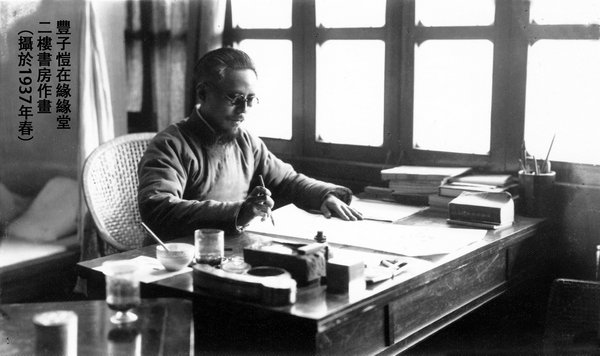
Feng Zikai
Introduction
Feng Zikai (1898-1975) stands as a luminary in 20th-century Chinese culture, recognized for his significant contributions to painting and writing. His work is characterized by a unique style that offers reflections on social realities and human nature, often through a lens of gentle sarcasm and poetic delicacy. Feng's artistic endeavors spanned various mediums, including essays infused with personal daily experiences, ink paintings celebrating the beauty of life, and translations that bridged cultural gaps. Feng's legacy continues to resonate across generations, as evidenced by numerous exhibitions commemorating his influence on art and literature.
Early Life and Education
Feng Zikai was born in 1898 in Tongxiang, a town situated in the Zhejiang province of China. His early education took place in Hangzhou, where he attended a normal school that significantly influenced his artistic sensibilities. The serene landscapes and leisurely lifestyle of Hangzhou left an indelible mark on Feng, shaping the lighthearted and reflective tone evident in his later works. This environment nurtured his burgeoning interest in art and literature, setting the foundation for his future career as a painter and writer.
In 1921, Feng pursued further studies in Japan, where he initially aimed to master the art of oil painting. However, the high costs and technical demands of oil painting led him to explore alternative styles. During this period, Feng encountered the works of Yumeji Takehisa, a Japanese artist whose approach to art emphasized simplicity and social commentary over technical perfection. Inspired by Takehisa's style, Feng began to develop his unique artistic language, which combined elements of traditional Chinese ink painting with influences from Western art.
Artistic Career
Feng Zikai's artistic career is marked by his ability to blend traditional Chinese aesthetics with modern sensibilities. His works are renowned for their simplicity, unpretentiousness, and profound insights into human nature and societal issues. Feng's paintings often depict tranquil and delightful moments of everyday life, infused with a sense of poetic beauty and gentle humor. He employed a minimalist style, abandoning intricate brushwork in favor of straightforward compositions that left blank spaces—an artistic technique known as liubai—to evoke a sense of openness and contemplation.
Influences and Style
Feng's artistic style was profoundly influenced by his teacher, Li Shutong, also known as Master Hong Yi, a multifaceted artist and Buddhist monk. The friendship and artistic collaboration between Feng and Master Hong Yi enriched Feng's outlook on art and life. The Buddhist principles of compassion and mindfulness permeated Feng's works, as seen in his series of paintings that advocate for the protection of living beings.
The simplicity and directness of Western oil painting inspired Feng to adopt a more straightforward approach in his compositions, emphasizing clarity and emotional resonance over elaborate detail. This fusion of Eastern and Western influences resulted in a distinctive style that remains celebrated for its elegance and accessibility.
Major Works
Among Feng Zikai's most significant works are his painting albums such as Big Tree, Saving Lives, and Paintings for Engou. These collections showcase Feng's ability to marry visual art with poetic narrative, creating works that speak to both the heart and mind. Big Tree, created in 1939, reflects Feng's experiences during the turbulent times of war, capturing the resilience and hope of the human spirit. The title piece, illustrating a tree that continues to grow despite being severely cut, serves as a metaphor for perseverance and renewal.
The Saving Lives album, spanning from 1927 to 1973, embodies Feng's Buddhist-inspired compassion and reverence for all living beings. It is a testament to his lifelong commitment to promoting kindness and empathy through art. Similarly, Paintings for Engou, a series dedicated to his youngest son, captures the innocence and joy of childhood, emphasizing the qualities Feng admired in children and sought to preserve in his work.
Literary Contributions
In addition to his achievements in visual art, Feng Zikai made substantial contributions to Chinese literature. His essays, characterized by an approachable and delightful tone, offer insights into the simple yet profound aspects of daily life. Drawing from personal experiences, Feng's writings explore themes of family, friendship, and the beauty of mundane moments. His literary style mirrors the gentle humor and thoughtful observations present in his paintings, creating a cohesive body of work that resonates with readers across various backgrounds.
Feng's role as a translator further highlights his literary prowess and dedication to cultural exchange. By translating works from foreign languages into Chinese, Feng helped broaden the horizons of Chinese literature, introducing new ideas and perspectives to his audience. His translations are noted for their clarity and fidelity to the original texts, showcasing his skill in bridging linguistic and cultural divides.
Philosophy and Beliefs
Feng Zikai's philosophy is deeply rooted in his Buddhist beliefs and his commitment to the principles of compassion, empathy, and mindfulness. Throughout his life, Feng maintained a sense of optimism and resilience, even in the face of adversity. His works often reflect a profound respect for life in all its forms, advocating for the protection and appreciation of nature, animals, and fellow human beings.
Feng's belief in the transformative power of art is evident in his dedication to creating works that inspire reflection and introspection. He viewed art as a means of cultivating a kinder and more compassionate world, encouraging individuals to look beyond their immediate circumstances and connect with the universal human experience. This philosophy guided Feng's artistic and literary endeavors, leaving a lasting impact on Chinese culture and beyond.








